

Off-Page AI Consensus Graphs: Why Backlinks Don't Trigger Citations and How LLMs Validate Brand Authority

Generative answer engines don't use PageRank. If you want citations from Perplexity and ChatGPT, you must engineer off-page entity co-occurrence and consensus graphs. Here is the technical breakdown
Off-Page AI Consensus Graphs: Why Backlinks Don't Trigger Citations and How LLMs Validate Brand Authority
Enterprise marketing teams routinely spend thousands of hours acquiring high-domain-authority backlinks, only to watch ChatGPT, Perplexity, and Google AI Overviews cite an obscure competitor with a fraction of their link profile. When this happens, leadership usually assumes the AI is hallucinating. It isn't. The AI is simply measuring authority using a completely different mathematical model than legacy search engines.
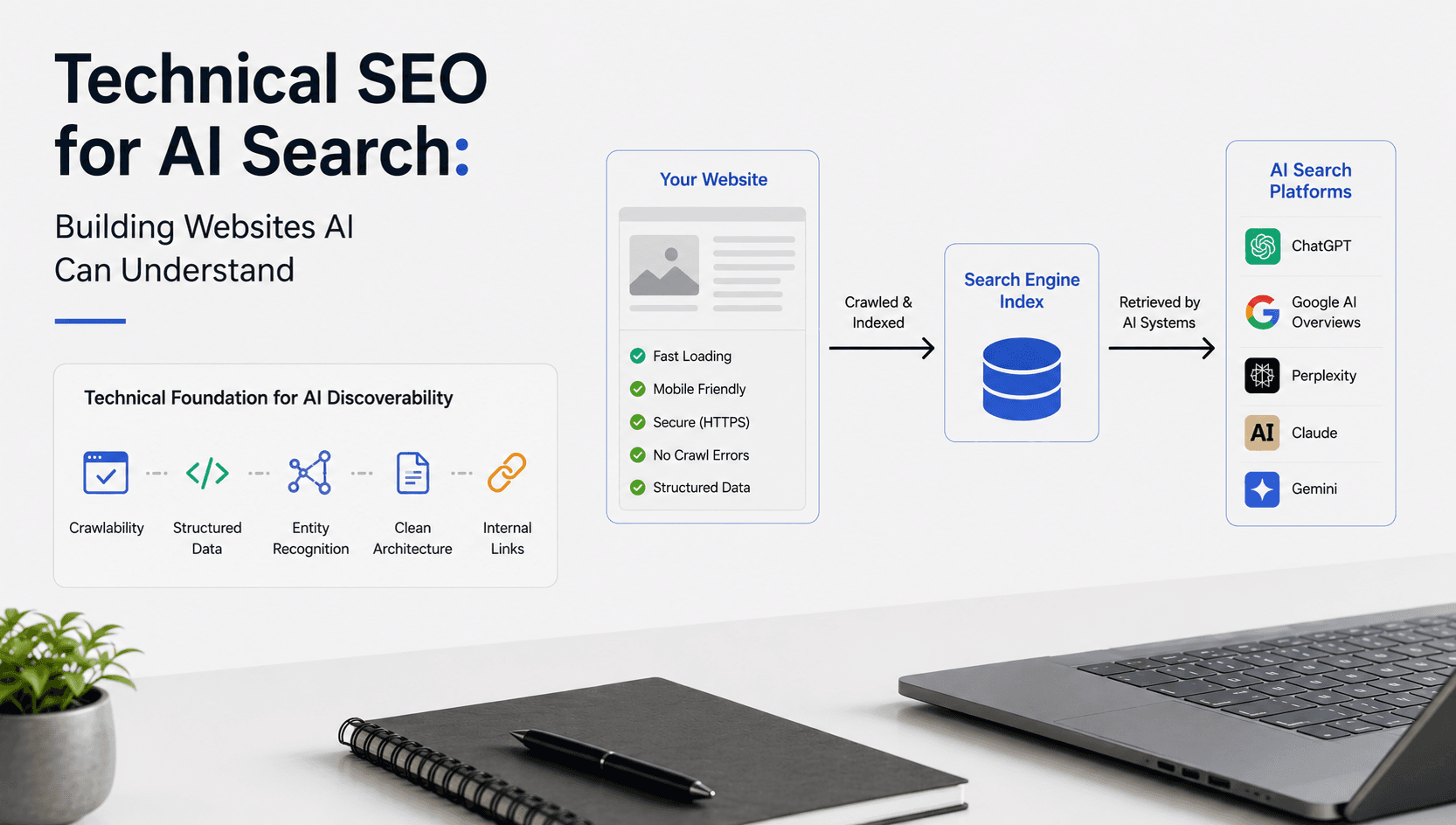
Large Language Models (LLMs) do not calculate PageRank. They do not care about the raw volume of hyperlinks pointing to your homepage. Instead, generative answer engines rely on Retrieval-Augmented Generation (RAG) to synthesize answers based on semantic co-occurrence and third-party consensus.
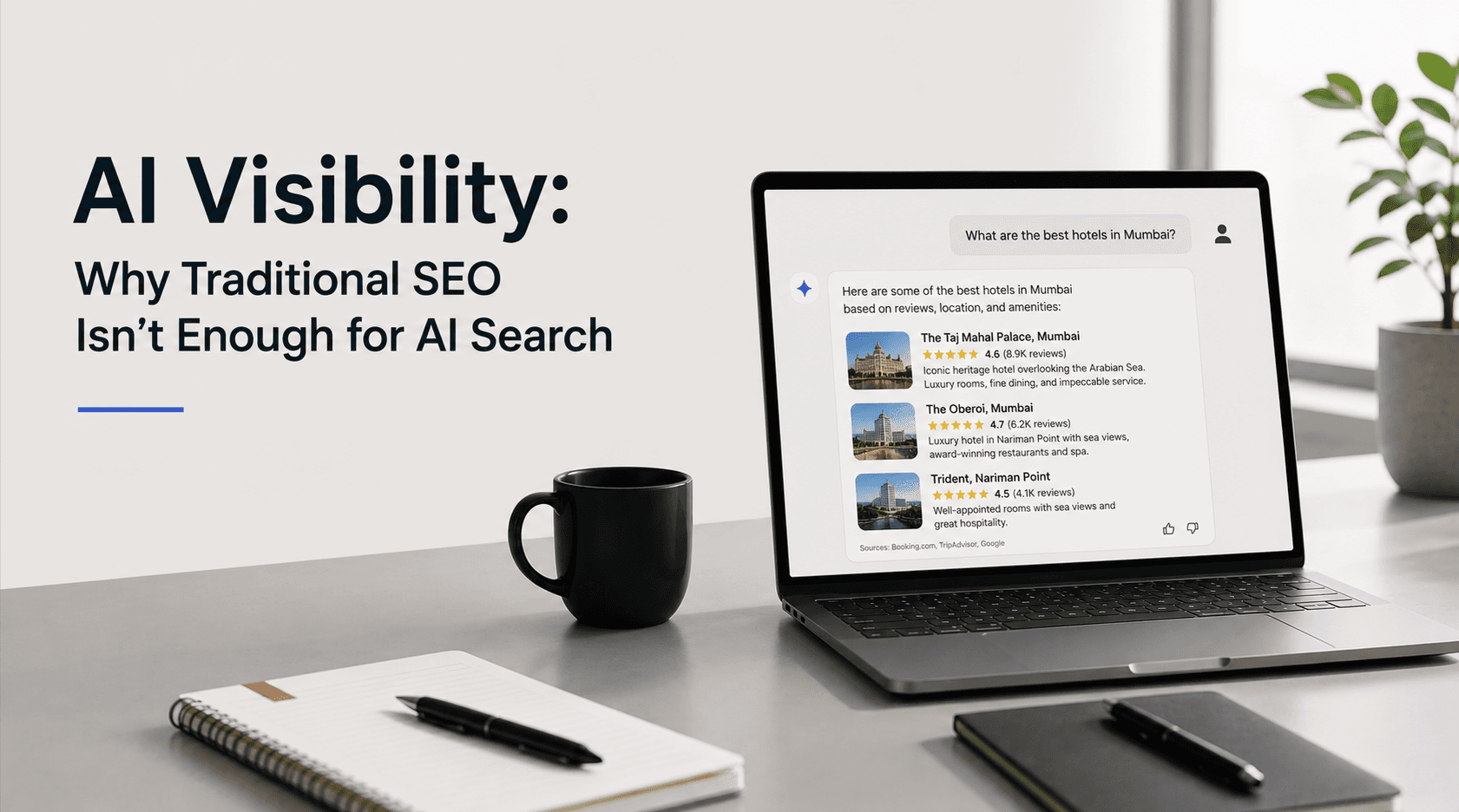
If your brand is entirely absent from the underlying "cited sources" of an AI response, it means the model's orchestrator could not mathematically verify your technical authority across the wider web. Getting your platform recommended by LLMs requires engineering an off-page AI consensus graph.
The Fallacy of the Traditional Backlink
For two decades, the hyperlink was the fundamental unit of digital trust. If a reputable site linked to you, Google inferred authority.
AI answer engines evaluate trust through association and entity clarity, not links. When an orchestrator searches the live web to answer an enterprise query, it is looking for multi-source validation. It asks: *Does this brand entity frequently co-occur alongside established industry concepts and recognized category leaders in unstructured text?*
A hyperlinked logo on a generic directory site provides zero semantic value to an LLM. However, an unlinked mention of your enterprise platform inside a highly structured GitHub repository, a PyPI package document, or a Tier-1 financial report (like an SEC filing or Forbes market analysis) signals immense authority. The AI learns that if your brand name consistently appears in the same paragraph as established industry leaders or complex technical benchmarks, your entity is a legitimate, relevant solution.
| Trust Mechanism | Legacy SEO (Link Building) | Generative Engine Optimization (AI Consensus) |
|---|---|---|
| Primary Metric | Domain Rating (DR) and total backlink volume | Entity co-occurrence probability across diverse corpora |
| Value of a Link | High; passes "link juice" directly to the target URL | Negligible; models analyze the surrounding text, not the hyperlink itself |
| Trust Signals | Anchor text matching target keywords | Unlinked brand mentions alongside recognized competitors or technical specs. |
| Validation Sources | Any high-DR blog or partner page | Verified knowledge bases (Wikidata), GitHub, developer docs, and financial filings |
Engineering the Triangulation Corpus
To build trust, AI engines cross-reference multiple independent sources to "triangulate" the truth before generating an answer. If your website claims you are the leading AI infrastructure firm in London, but no external technical documentation corroborates that claim, the model drops your data as unverified marketing copy.
To engineer an off-page consensus graph, enterprise platforms must intentionally seed their entity data into the specific triangulation corpora that AI models prioritize during live retrieval:
- Claim and structure your Wikidata node: Ensure your brand has a verified Wikidata Q-ID. LLMs rely heavily on Wikidata to resolve entity ambiguity.
- Embed in open-source and technical registries: Ensure your brand, API endpoints, and technical documentation are referenced in GitHub Readmes, StackOverflow answers, and relevant package managers (NPM, PyPI). These are high-trust environments for technical LLMs.
- Deploy identical entity data globally: If your company name, value proposition, or headquarters location contradicts itself across LinkedIn, G2, your local Google Business Profile, and your website, the model's confidence score plummets, and you get filtered out. Inconsistency equals distrust in a RAG pipeline.
How Pixenox Builds AI Visibility
At Pixenox, we do not run legacy link-building campaigns. We engineer Generative Engine Optimization (GEO) pipelines. By explicitly mapping your corporate entity across high-trust triangulation corpora, implementing precise JSON-LD schema on your core domain, and establishing dense semantic co-occurrence, we ensure AI models mathematically trust your brand enough to cite it.
Visibility in the generative era is not about who yells the loudest or buys the most links. It is about presenting the most consistent, machine-readable, and third-party-validated entity to the AI orchestrator.
Any questions about this blog?
Frequently Asked Questions
What is entity co-occurrence in AI search?
Entity co-occurrence is a statistical measurement of how often your brand name appears in close proximity to recognized industry terms, category leaders, or factual benchmarks within text across the web. LLMs use this proximity to infer your brand's relevance and authority without relying on hyperlinks.
Why did ChatGPT recommend my competitor even though we have more backlinks?
ChatGPT (and other models utilizing Retrieval-Augmented Generation) synthesizes answers from content that provides clear, extractable facts and strong third-party corroboration. If your competitor is mentioned frequently in high-trust technical documentation or tier-1 publications, the AI considers them more authoritative, regardless of their legacy backlink count.
How do AI engines validate brand authority if they don't use PageRank?
They look for semantic consensus. The AI checks if the claims made on your website (e.g., your services, locations, and compliance standards) perfectly align with the data found on external, high-trust databases like Wikidata, G2, and industry-specific registries. An unbroken, consistent entity profile across these platforms establishes authority.
Does this mean we should delete our backlinks?
No. Backlinks still assist legacy search crawlers (like Googlebot) in discovering your pages. However, for the specific goal of getting cited in an AI-generated answer, the text surrounding the mention matters exponentially more than the link itself.