

How AI Systems Are Changing the Way Businesses Work

AI systems are helping businesses automate work, improve decision making, reduce manual effort, and create smarter customer experiences. Learn how companies can use AI to build faster, more efficient, and scalable digital operations.
What is an AI system in business?
An AI system in business is a digital solution that uses artificial intelligence to understand information, automate tasks, support decisions, and improve workflows. It can be used in websites, apps, dashboards, CRM systems, customer support, marketing, sales, analytics, and internal operations.
A normal software system follows fixed instructions. But an AI system can analyze data, understand patterns, respond to questions, generate content, recommend actions, and support business teams in a smarter way.
For example, a business can use AI to answer customer questions, qualify leads, generate reports, analyze sales data, summarize documents, or automate repetitive tasks.
This makes AI not just a technology trend, but a practical business tool.
Why are businesses moving towards AI systems?
Businesses are moving towards AI systems because they want faster operations, better customer response, lower manual effort, and smarter decision making.
In many companies, teams spend a lot of time doing repeated work. They manually reply to inquiries, update spreadsheets, prepare reports, track leads, and search for information. These tasks take time and reduce productivity.
AI systems help businesses complete these activities faster. They can support employees, improve accuracy, and make operations smoother.
Companies that use AI properly can save time, improve service quality, and focus more on growth.
How does AI reduce manual work?
AI reduces manual work by automating repeated tasks that do not always need human effort. These tasks can include answering common questions, sorting customer inquiries, creating summaries, sending follow up messages, analyzing data, and generating basic content.
For example, if a company receives many customer inquiries every day, an AI assistant can collect customer details, understand their requirement, suggest the right service, and pass qualified leads to the sales team.
This reduces the pressure on human teams and helps them focus on important conversations.
AI does not always replace people. In many cases, it works as a support system that helps people work faster and better.
How can AI improve customer experience?
AI can improve customer experience by giving faster, clearer, and more personalized responses. Customers do not like waiting for basic information. They want quick answers, smooth communication, and simple guidance.
An AI powered website or app can help customers understand services, compare options, ask questions, book appointments, or submit requirements without delay.
For example, when a visitor lands on a website, an AI assistant can guide them based on their need. If they are looking for website development, the assistant can ask about business type, budget, timeline, and required features.
This creates a better experience because the customer gets instant support and the business gets useful lead information.
What is the role of AI agents in business operations?
AI agents are intelligent systems that can perform tasks, make decisions, and interact with tools based on business instructions. They can be used for sales, support, operations, reporting, research, lead management, and workflow automation.
A simple chatbot only answers questions. But an AI agent can do more. It can collect data, trigger actions, update systems, prepare summaries, send notifications, and support complete workflows.
For example, an AI sales agent can identify a lead, ask qualification questions, store the details in a CRM, and notify the sales team.
This makes AI agents useful for businesses that want automation beyond basic chat support.
How does AI help in decision making?
AI helps in decision making by analyzing data and showing useful insights. Businesses often collect data from websites, sales, ads, customers, operations, and finance. But many businesses do not use this data properly.
AI can help find patterns in this data. It can show which services are getting more interest, which pages are performing better, which leads are more valuable, and where customers are dropping off.
This helps business owners and teams make decisions based on real information instead of guesswork.
For example, if analytics show that many visitors are reading one service page but not submitting the form, the business can improve the call to action, pricing explanation, or contact flow.
Why should AI be connected with websites and software platforms?
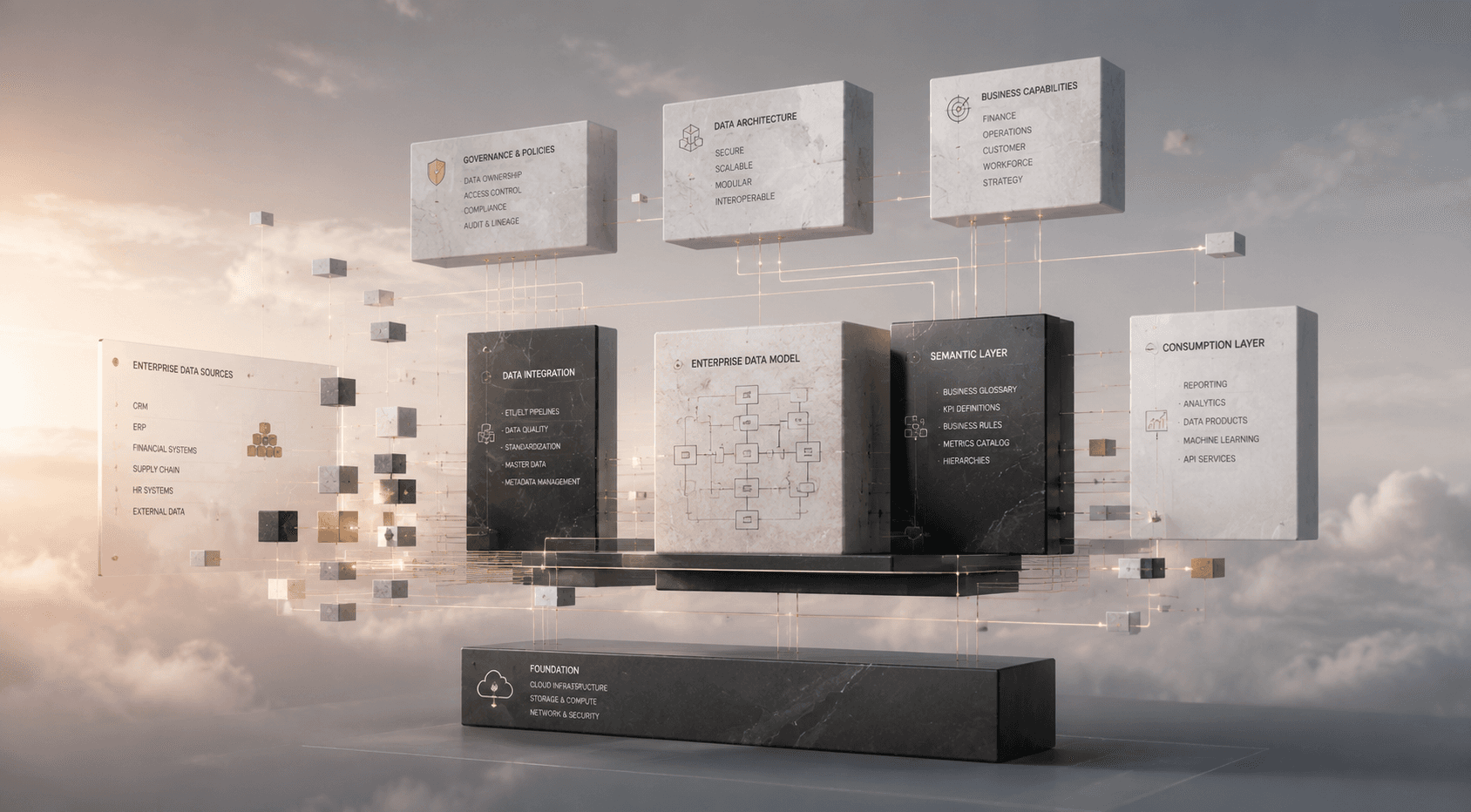
AI becomes more powerful when it is connected with websites, apps, dashboards, CRM systems, and business software. If AI is used separately, its impact may be limited. But when it is integrated into the business system, it can create real operational value.
For example, an AI assistant on a website can collect user requirements. That data can move into a CRM. The CRM can trigger follow up emails. The sales team can get notifications. The business owner can see analytics in a dashboard.
This connected system saves time and improves business performance.
That is why AI should not be treated as only a chatbot. It should be part of a complete digital workflow.
What mistakes do businesses make while using AI?
Many businesses make the mistake of using AI without a clear strategy. They add a chatbot or AI tool without understanding the actual business problem.
Another mistake is using generic AI tools that are not connected to the company’s data, process, or customer journey. This creates weak results because the AI cannot give accurate or useful support.
Some businesses also expect AI to solve everything immediately. But AI works best when it is planned properly, trained with the right information, connected with useful tools, and improved over time.
The goal should not be to use AI because everyone is using it. The goal should be to solve a real business problem with AI.
How can Pixenox help businesses build AI powered systems?
Pixenox can help businesses build AI powered systems that are practical, scalable, and connected with real business workflows.
This can include AI chat assistants, AI agents, automated lead qualification systems, AI based dashboards, document intelligence systems, content automation tools, customer support automation, and business process automation.
Pixenox can also connect AI with websites, SaaS platforms, cloud infrastructure, analytics, and growth systems. This helps businesses create digital platforms that are not only attractive, but also intelligent and useful.
For startups, Pixenox can help build AI enabled products. For service businesses, Pixenox can automate customer handling and lead management. For growing companies, Pixenox can build custom AI systems that support scale.
Final thoughts
AI is no longer only for large companies. Today, startups, small businesses, agencies, consultants, and enterprises can all use AI to improve the way they work. The real value of AI comes when it is connected with business goals. It should help companies save time, improve customer experience, reduce manual work, and make better decisions. A strong AI system is not just a feature. It is a business advantage. For companies that want to build smarter digital operations, AI systems can become the next major step in growth.
Any questions about this blog?