

GEO and Answer Engine Optimization: How AI Search Is Changing Digital Visibility

Learn how geo and answer engine optimization improve AI search visibility across ChatGPT, Google AI Overviews, Perplexity, Claude, and other answer engines through structured, entity-focused optimization.
Introduction
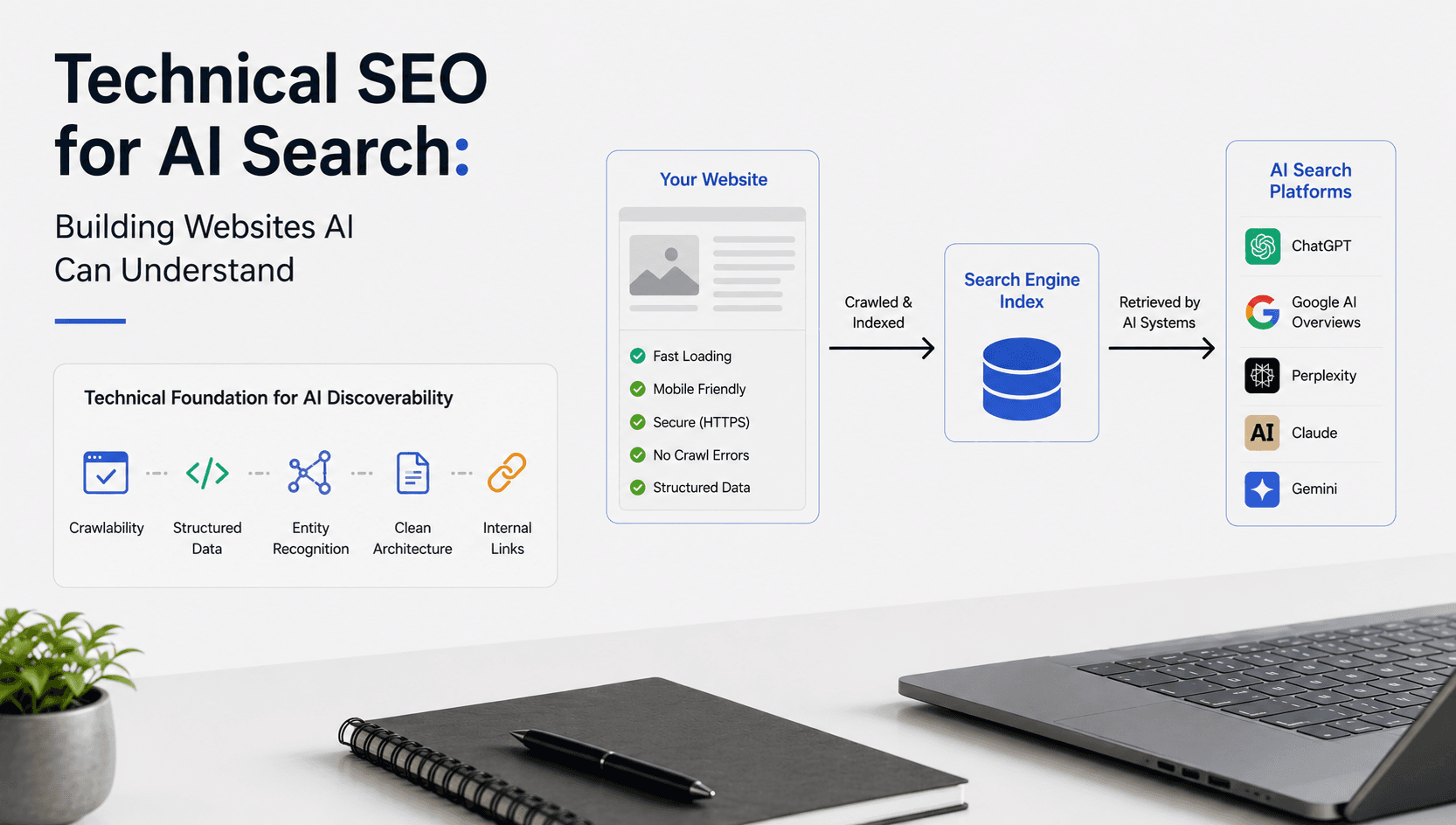
Search has entered a retrieval-first era. For more than two decades, websites competed for rankings on search engine results pages. Today, users increasingly receive answers directly from AI systems instead of clicking through multiple links. Google AI Overviews summarize information from numerous sources, ChatGPT answers complex questions conversationally, Perplexity cites web pages while synthesizing responses, and Claude and Gemini continue expanding how users discover information.
This shift changes what it means to be visible online. Traditional SEO focuses on improving rankings for specific keywords, but AI systems evaluate information differently. They retrieve content based on semantic meaning, entity relationships, source credibility, structured information, and confidence that the answer is accurate enough to present without introducing misinformation.
That evolution has given rise to Generative Engine Optimization (GEO) and Answer Engine Optimization (AEO). Rather than optimizing only for search engines, these disciplines help organizations become reliable sources that large language models and AI-powered search platforms can confidently reference.
Understanding this distinction matters because ranking well no longer guarantees visibility inside AI-generated answers. A website may hold the first organic position yet rarely appear in AI summaries, while another with lower rankings may be cited repeatedly because its content is clearer, better structured, and supported by stronger entity relationships.
This guide explains how GEO and AEO work, why they differ from traditional SEO, and how businesses can prepare their digital presence for an AI-first search ecosystem.
What Are GEO and Answer Engine Optimization?
Generative Engine Optimization focuses on increasing the likelihood that AI systems retrieve, understand, and reference your content when generating answers. Instead of optimizing only for search rankings, GEO improves how information is interpreted within retrieval pipelines used by large language models.
Answer Engine Optimization is closely related but emphasizes creating content that directly answers user questions in formats AI systems can easily extract. Well-written AEO content often begins with concise, factual explanations before expanding into deeper technical discussion. This structure benefits both human readers and retrieval systems because the primary answer is immediately identifiable.
Although the terms are frequently used together, they solve different problems. GEO strengthens discoverability across AI retrieval systems, while AEO improves answer quality once information has been retrieved. Organizations that combine both approaches increase the chances that their expertise is not only found but also quoted accurately.
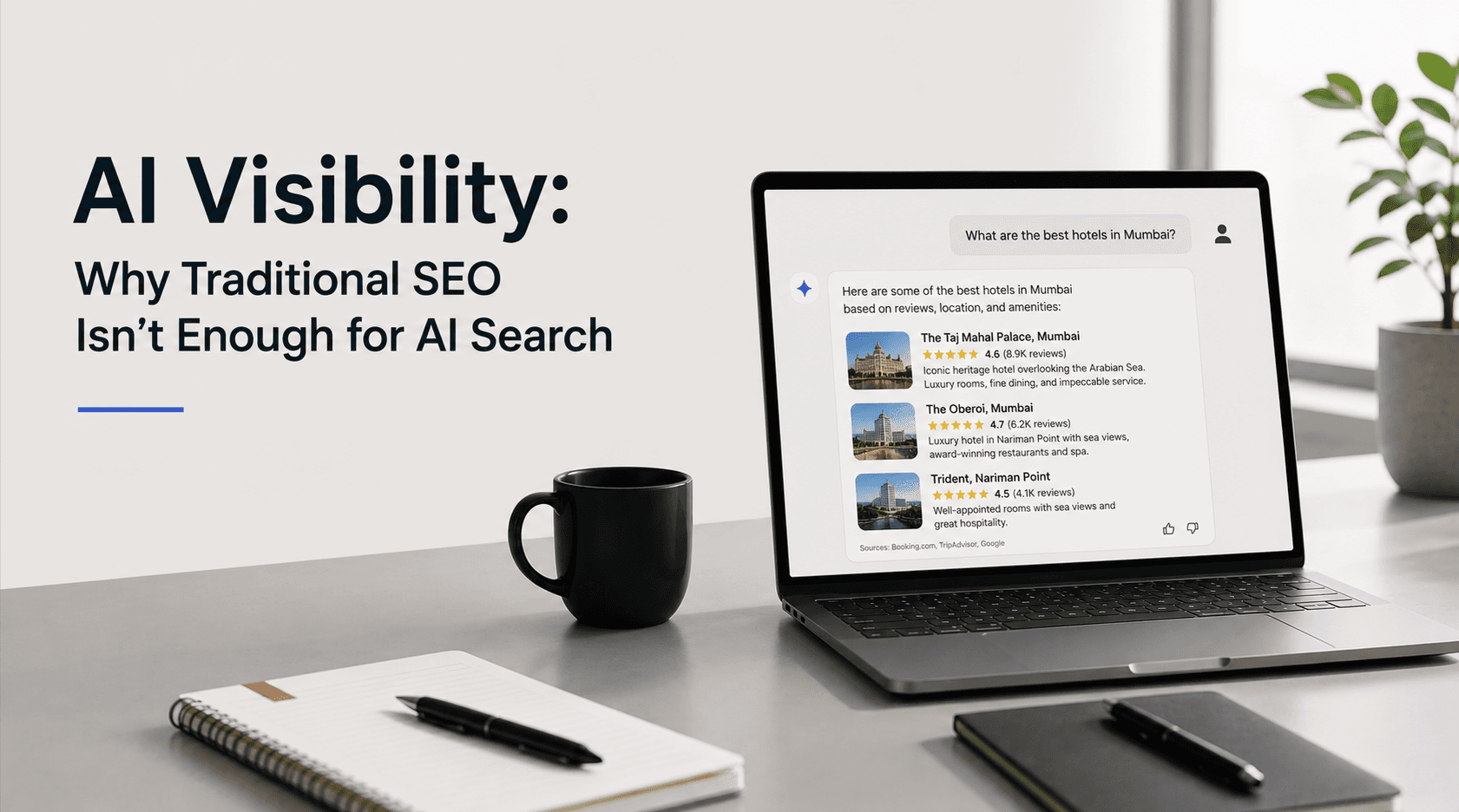
Another difference lies in optimization targets. Traditional SEO primarily aims to improve positions within search results. GEO and AEO optimize for inclusion inside generated responses, citations, AI recommendations, and conversational search experiences where users may never visit a traditional results page.
Why Traditional SEO Alone Is No Longer Enough
Traditional SEO remains essential because search engines still crawl, index, and evaluate websites using established ranking systems. High-quality content, technical performance, internal linking, and authoritative backlinks continue influencing organic visibility. However, AI search introduces additional evaluation layers that extend beyond conventional ranking signals.
Large language models do not retrieve documents solely because they rank highly. They retrieve documents that best match the semantic meaning of a user's question while satisfying confidence thresholds established by retrieval algorithms. If another source explains a concept more clearly, provides better contextual information, or demonstrates stronger authority on the specific entity, that source may be selected even if it ranks lower in traditional search.
This distinction explains why some brands dominate organic rankings but appear infrequently within AI-generated responses. Their content may satisfy Google's ranking algorithms yet lack the structured explanations, entity clarity, citation consistency, or contextual depth that retrieval systems prefer.
Search behavior has also changed. Users increasingly ask complete questions instead of entering short keyword phrases. They expect comparisons, recommendations, explanations, and follow-up context within a single interaction. AI systems respond by assembling information from multiple trusted sources rather than presenting a list of links.
As a result, optimization strategies must address both ranking systems and retrieval systems. Ignoring either limits long-term visibility.
How Large Language Models Retrieve Information
Many people assume large language models search the internet in real time before answering every question. In reality, retrieval depends on the platform, the model architecture, and whether external search or Retrieval-Augmented Generation (RAG) is available.
Without external retrieval, a model generates responses using patterns learned during training. While this enables broad knowledge, it can also introduce outdated information or factual inaccuracies because the model predicts likely text rather than verifying current facts.
Modern AI search platforms increasingly combine language models with retrieval systems. When a user submits a query, the system converts the question into mathematical vector representations known as embeddings. These embeddings capture semantic meaning rather than exact keyword matches. The retrieval engine then searches vector databases for documents whose embeddings closely resemble the query.
Similarity alone is not enough. Retrieved documents are evaluated for relevance, authority, freshness, consistency, and contextual completeness before portions are passed into the model's context window. The model synthesizes those sources into a coherent answer while attempting to preserve factual accuracy.
This retrieval pipeline explains why semantic clarity matters more than keyword repetition. A page that thoroughly explains a concept using consistent terminology and strong entity relationships often produces embeddings that align more closely with user intent than a page designed primarily around keyword density.
For businesses, this means optimization begins with information architecture rather than isolated keywords. The easier your expertise is to retrieve, interpret, and verify, the greater the likelihood that AI systems will incorporate it into generated answers.
Ranking vs. Retrieval: The Most Important Shift in AI Search
For years, SEO success was measured by rankings. A page that reached the first position for a valuable keyword often attracted the majority of clicks. AI search changes that measurement because the objective is no longer only to rank—it is to become retrievable and citable.
Ranking algorithms evaluate entire pages against hundreds of signals such as backlinks, page experience, topical relevance, freshness, and user behavior. Retrieval systems work differently. They identify the specific pieces of information that best answer a user's question, regardless of whether the page itself dominates traditional search results.
This distinction explains why AI-generated answers frequently cite multiple sources. Instead of selecting a single "winner," retrieval systems assemble evidence from several authoritative documents. One website may provide the best definition, another the strongest statistics, and a third the clearest implementation guidance. The final response combines these strengths into a single answer.
Retrieval confidence plays a central role in this process. Before presenting an answer, AI systems estimate whether the retrieved information is sufficiently reliable and internally consistent. If multiple trusted sources agree on the same fact, confidence increases. When reputable sources disagree or important details are missing, confidence declines, increasing the likelihood that the model hedges its response or seeks additional evidence.
For content creators, this means optimization should focus on becoming the definitive source for a topic rather than attempting to rank for every possible keyword variation. Comprehensive explanations, original insights, and factual consistency improve retrieval confidence more effectively than repeating target phrases.
The relationship between ranking and retrieval can be summarized as follows:
| Traditional SEO | GEO & AEO |
|---|---|
| Optimizes pages to rank higher in search results. | Optimizes information to be retrieved and cited by AI systems. |
| Success is measured by rankings and clicks. | Success is measured by AI citations, recommendations, and answer inclusion. |
| Keywords are primary relevance signals. | Semantic meaning and entities determine retrieval relevance. |
| Backlinks strongly influence authority. | Authority also depends on entity relationships, source consistency, and factual reliability. |
| Users choose which result to open. | AI selects information before users see the sources. |
Understanding this difference prevents businesses from chasing outdated metrics. High rankings remain valuable, but retrieval determines whether your expertise appears inside AI-generated answers.
Why Entity SEO Matters More Than Keyword Density
Keywords describe language. Entities describe things.
A keyword might be "AI search optimization." The corresponding entities include concepts such as Google AI Overviews, ChatGPT, Perplexity, structured data, vector databases, semantic search, and Retrieval-Augmented Generation. AI systems understand these as interconnected concepts rather than isolated phrases.
Large language models organize knowledge through relationships. They recognize that ChatGPT is a conversational AI platform, that schema markup supports structured information, and that Google's Knowledge Graph represents entities and their attributes. These relationships allow models to understand context beyond exact wording.
Entity SEO strengthens those relationships. Instead of optimizing a page around repeated keyword variations, it builds semantic completeness by covering related concepts, definitions, examples, technologies, and supporting entities. This creates a richer representation of the topic, making retrieval systems more confident that the page genuinely demonstrates expertise.
Consider a page discussing Google AI Overviews. Mentioning retrieval pipelines, structured data, Knowledge Graphs, semantic search, citations, and user intent provides contextual signals that reinforce topical authority. The page becomes part of a broader knowledge network rather than an isolated article targeting one phrase.
Consistency also matters. Organizations should use the same brand name, product names, author information, and business details across their website, social profiles, documentation, press coverage, and trusted directories. Consistent entity references reduce ambiguity and strengthen digital identity, making it easier for AI systems to associate information with the correct organization.
Businesses that invest in entity optimization often discover an additional benefit: their content becomes easier for both humans and machines to understand. Clear definitions, logical topic relationships, and precise terminology improve readability while simultaneously enhancing retrieval quality.
Structured Data Helps Machines Understand Context
Structured data has traditionally been associated with rich search results such as review stars, FAQs, recipes, and product snippets. In the AI era, its role extends beyond visual enhancements. Structured data provides explicit context that helps machines interpret the meaning of information rather than inferring it from unstructured text alone.
Schema markup identifies entities, attributes, relationships, authors, organizations, products, events, and many other content types using standardized vocabularies. While structured data does not guarantee inclusion in AI-generated answers, it reduces ambiguity and increases the likelihood that systems correctly interpret your content.
For example, an article with clearly defined authors, publication dates, organization details, and references allows retrieval systems to establish provenance. Understanding who created the content, when it was published, and how it relates to other entities contributes to trust assessment.
Different schema types serve different purposes. An Article schema helps define editorial content, while an Organization schema establishes business identity. FAQPage schema clarifies question-and-answer relationships, and BreadcrumbList schema reinforces site hierarchy. Together, these create a machine-readable representation of the website that complements the visible content.
Structured data is most effective when it reflects the actual content of the page. Marking up information that users cannot see or using inaccurate schema types introduces inconsistencies that reduce trust. Search engines have become increasingly effective at detecting markup that does not accurately represent page content.
Another advantage of structured data is interoperability. Multiple AI systems, search engines, and knowledge graphs rely on standardized formats to exchange and interpret information. Websites that adopt widely recognized schemas reduce friction across retrieval ecosystems, improving discoverability beyond a single platform.
The objective is not to add every available schema type. It is to provide enough structured context that both search engines and AI retrieval systems can confidently identify entities, understand relationships, and accurately represent the information they contain.
Source Consistency and Digital Authority: Why AI Trusts Some Brands More Than Others
A large language model rarely evaluates a website in isolation. Instead, it forms a confidence score from signals distributed across the web. Your website, documentation, press coverage, business profiles, research publications, social accounts, partner pages, and industry citations all contribute to a broader picture of digital authority.
This is why source consistency has become a foundational principle of GEO. If your company describes itself as an AI Search consultancy on its website, a technical SEO agency on LinkedIn, a digital marketing firm in business directories, and a software company in press releases, AI systems receive conflicting signals about your core expertise. Even though humans can usually infer the connection, retrieval systems are more confident when entity descriptions remain consistent.
Consistency extends beyond branding. Company names, author biographies, office locations, product names, publication dates, and contact information should remain aligned across every authoritative source. Discrepancies create ambiguity that weakens entity resolution, making it harder for knowledge graphs to associate scattered mentions with the same organization.
Author identity also influences trust. Technical articles written by identifiable subject matter experts are easier to evaluate than anonymous content. Author pages that describe expertise, link to professional profiles, and reference published work help establish topical authority. While author credentials alone do not guarantee visibility, they strengthen the overall evidence that AI systems use when assessing information quality.
Digital authority also depends on the quality of external references. A mention in an industry publication carries more weight than dozens of low-quality directory listings because trusted publications contribute stronger evidence within the broader citation network. AI retrieval systems increasingly prioritize corroborated information rather than isolated claims.
Businesses should think of authority as an ecosystem rather than a single metric. Every accurate, consistent, and verifiable mention reinforces the organization's identity. Over time, this accumulation of evidence increases the likelihood that AI systems recognize the brand as a reliable source for its areas of expertise.
Brand Mentions, Citation Networks, and Trust Signals
Traditional SEO emphasized backlinks because hyperlinks helped search engines measure authority between websites. AI search expands that concept by evaluating citation networks and brand mentions, even when no hyperlink exists.
When respected publications, research papers, podcasts, conference presentations, and educational resources consistently reference a company, those mentions contribute contextual evidence about the brand's expertise. The surrounding language often matters as much as the mention itself. Being repeatedly associated with topics such as technical SEO, structured data, or AI Retrieval Optimization strengthens semantic connections between the brand and those subjects.
Citation quality outweighs citation quantity. Hundreds of mentions from unrelated websites contribute far less than a handful of references from recognized industry authorities. AI systems attempt to identify whether independent sources reach similar conclusions about an entity. Agreement across trusted sources increases retrieval confidence because it reduces uncertainty.
Trust signals also include factual transparency. Original research, published methodologies, named contributors, revision histories, references to primary sources, and clearly documented statistics all make content easier to verify. AI systems prefer information that can be corroborated rather than unsupported opinions presented as facts.
Another overlooked signal is topical consistency. A website that publishes deeply researched content around AI search, semantic SEO, and structured data over several years establishes stronger topical authority than a general marketing blog that occasionally covers AI trends. Consistent expertise creates predictable entity relationships, making future content easier for retrieval systems to classify.
Organizations should therefore invest in building a citation ecosystem rather than pursuing isolated SEO tactics. Every credible mention, expert contribution, research publication, and industry collaboration adds another layer of evidence that supports long-term AI visibility.
Understanding RAG, Vector Search, and Embedding Similarity
Many modern AI search platforms rely on Retrieval-Augmented Generation, commonly called RAG. Understanding this architecture explains why some content is consistently cited while other content remains invisible despite strong traditional SEO performance.
RAG separates retrieval from generation. Instead of relying solely on information learned during model training, the system first searches an external knowledge source for relevant documents. Those retrieved passages are then provided to the language model, which generates a response using both its existing knowledge and the retrieved evidence. This process improves factual accuracy because the model can reference current information rather than depending entirely on its training data.
The retrieval stage relies heavily on vector search. Rather than matching exact keywords, documents are converted into numerical representations known as embeddings. These embeddings capture semantic meaning, allowing the system to identify conceptually similar content even when different wording is used.
For example, a user searching for "how to optimize content for AI search" may retrieve documents discussing Generative Engine Optimization, AI discoverability, semantic retrieval, or LLM Optimization, even if the exact search phrase never appears. The embeddings reveal that these concepts occupy similar positions within semantic space.
Embedding similarity changes how content should be written. Pages that comprehensively explain a subject using accurate terminology, related entities, and logical context generate richer semantic representations than pages designed around repetitive keyword placement. Retrieval systems can therefore identify genuine expertise even when wording varies.
Context windows introduce another consideration. AI models can process only a limited amount of retrieved information during each interaction. Documents with concise introductions, clearly defined concepts, and logical organization are easier to incorporate into those context windows. Content buried beneath unnecessary introductions or repetitive explanations may never reach the model, even if the page is technically relevant.
This explains why information architecture is becoming as important as keyword optimization. Clear headings, focused sections, descriptive subtopics, and coherent topic progression improve both human comprehension and retrieval efficiency. AI systems are more likely to extract information from documents that minimize ambiguity and maximize contextual clarity.
Businesses should view RAG as a bridge between search engines and language models. Traditional SEO helps users find your content, while GEO increases the probability that retrieval systems select it as trusted evidence during answer generation. Organizations that optimize for both layers are better positioned as AI search continues to evolve.
Measuring GEO and AEO Success
One of the biggest challenges in Generative Engine Optimization is measurement. Traditional SEO offers familiar metrics such as keyword rankings, impressions, click-through rates, backlinks, and organic traffic. AI search introduces a different objective: being selected as a trusted source within generated answers. That outcome is harder to quantify because AI platforms often synthesize information without exposing the same level of reporting as search engines.
The first KPI should be AI citation frequency. Businesses should monitor how often their brand, content, research, or products appear in responses generated by platforms such as ChatGPT, Google AI Overviews, Perplexity, Gemini, and Claude. Citation frequency indicates whether retrieval systems consistently recognize the organization as an authoritative source.
Organic traffic should still be monitored, but its interpretation must change. A decline in clicks does not necessarily indicate reduced visibility. AI-generated answers frequently satisfy user intent without requiring a website visit. In these situations, impressions, branded searches, direct traffic, and assisted conversions may provide a more accurate picture of digital influence than clicks alone.
Entity visibility is another valuable metric. Organizations should evaluate whether AI systems consistently understand their products, services, founders, locations, and areas of expertise. If an AI assistant describes the business inaccurately or omits important offerings, the underlying entity relationships likely need improvement.
Content coverage also deserves attention. Instead of tracking isolated keywords, measure how comprehensively your website addresses an entire topic cluster. A site that thoroughly covers semantic SEO, structured data, knowledge graphs, vector retrieval, AI visibility, and GEO is more likely to become a trusted topical authority than one with a handful of disconnected articles.
Technical health remains essential because retrieval begins with accessible content. Crawlability, indexability, page performance, structured data validation, canonicalization, and internal linking all influence whether AI systems can efficiently discover and interpret information.
Perhaps the most meaningful long-term KPI is retrieval consistency. If different AI platforms independently surface your content for similar questions, that suggests your digital authority extends beyond a single ecosystem. Consistency across multiple answer engines indicates that your optimization strategy is aligned with broader retrieval principles rather than platform-specific behavior.
Common GEO and AEO Mistakes Businesses Should Avoid
Many organizations approach AI search by applying traditional SEO tactics without considering how retrieval systems evaluate information. This often produces content that ranks reasonably well but rarely appears in AI-generated answers.
One common mistake is writing primarily for keywords instead of concepts. Pages overloaded with keyword variations may satisfy outdated optimization practices while providing little semantic depth. AI retrieval systems prioritize comprehensive explanations that connect related entities and answer the broader question behind a search.
Another frequent issue is fragmented content architecture. Businesses often publish dozens of articles covering overlapping topics without establishing clear relationships between them. This weakens topical authority because retrieval systems struggle to determine which page represents the definitive resource. Well-organized content hubs supported by logical internal linking provide much stronger semantic signals.
Many websites also neglect entity optimization. Authors remain anonymous, organizations lack structured identity, products are inconsistently named, and important concepts are never explicitly defined. These gaps create ambiguity that reduces retrieval confidence, even when the underlying information is accurate.
Structured data misuse is another recurring problem. Some organizations add every available schema type without considering whether it accurately represents the page. Others implement outdated or incomplete markup that conflicts with visible content. Structured data should clarify meaning rather than attempt to manipulate search engines.
Another misconception is treating AI-generated content as inherently sufficient. Large volumes of generic articles rarely establish authority because they contribute little original information. Retrieval systems increasingly reward information gain, meaning content that introduces unique research, implementation experience, technical analysis, or practical insights beyond what already exists elsewhere.
Finally, businesses often optimize only their website while ignoring the broader digital ecosystem. AI systems evaluate information across multiple trusted sources. Inconsistent company descriptions, outdated business profiles, conflicting documentation, and missing expert biographies all weaken the overall entity signal. GEO succeeds when the entire digital footprint communicates a consistent and verifiable story.
The Future of AI Search and What Businesses Should Do Next
AI search is not replacing traditional search engines; it is changing how information is discovered, evaluated, and presented. Search results are gradually evolving from collections of links into synthesized answers supported by multiple authoritative sources. Organizations that adapt early will be better positioned as retrieval-first experiences become more common.
Future retrieval systems are likely to place even greater emphasis on factual verification, entity relationships, source provenance, and contextual understanding. As language models become more capable of reasoning across multiple documents, superficial content optimization will become less effective. Clear expertise supported by consistent evidence will increasingly determine visibility.
Knowledge graphs will continue expanding their role as structured representations of real-world entities. Businesses that clearly define their products, services, people, locations, and expertise using structured data and consistent terminology will make it easier for AI systems to understand and retrieve their information accurately.
Search experiences will also become increasingly conversational. Users will ask complex, multi-step questions instead of isolated keyword queries. This shift favors content that explains relationships, trade-offs, implementation strategies, and practical implications rather than offering brief definitions alone. Pages capable of answering follow-up questions within the same document will naturally align with these conversational retrieval patterns.
Another emerging trend is personalized retrieval. AI systems are becoming better at incorporating user context, preferences, location, and previous interactions into generated responses. Businesses should therefore optimize not only for broad informational queries but also for industry-specific, regional, and problem-oriented search intent that reflects real decision-making processes.
The organizations that succeed in AI search will treat GEO, AEO, technical SEO, semantic SEO, and Search Experience Optimization as complementary disciplines rather than separate strategies. Traditional rankings will remain valuable, but visibility will increasingly depend on whether AI systems recognize your content as trustworthy enough to retrieve, understand, and recommend.
The objective is no longer to become the highest-ranked page for a keyword. It is to become the source that both humans and AI systems consistently trust when answering important questions. That shift represents the most significant evolution in search since the introduction of modern search engines, and it will shape digital visibility for years to come.
Any questions about this blog?
Frequently Asked Questions
What is the difference between Generative Engine Optimization and Answer Engine Optimization?
Generative Engine Optimization focuses on improving how AI systems discover, retrieve, and cite content during response generation. Answer Engine Optimization concentrates on structuring information so that AI assistants and search engines can extract clear, accurate answers to user questions. GEO emphasizes discoverability within retrieval pipelines, while AEO emphasizes answer quality and readability. In practice, the two approaches complement each other because content that is easy to retrieve should also be easy to understand and quote.
Does traditional SEO still matter in the age of AI search?
Yes. Technical SEO, high-quality content, internal linking, crawlability, and backlinks remain essential because AI retrieval systems often depend on search engine indexes and trusted web sources. However, traditional SEO alone is no longer sufficient. Organizations must also optimize semantic relationships, structured data, entity clarity, and topical authority so that AI platforms can confidently retrieve and synthesize their information.
How does ChatGPT choose which sources to reference?
The answer depends on the version and whether external search or Retrieval-Augmented Generation is available. When retrieval is enabled, ChatGPT evaluates semantic relevance, source quality, factual consistency, and contextual usefulness rather than relying solely on keyword rankings. Multiple authoritative sources may be combined into a single response, with preference given to information that is clear, well-structured, and supported by reliable evidence.
Why are entities more important than keywords?
Keywords describe words people search for, while entities represent real-world concepts such as companies, people, products, technologies, and locations. AI systems understand relationships between entities, allowing them to interpret meaning even when different terminology is used. Optimizing entity relationships helps retrieval systems understand context more accurately than relying on repeated keyword phrases.
Can structured data improve AI visibility?
Structured data helps search engines and AI systems interpret the meaning of content by explicitly identifying entities, authors, organizations, products, and other important information. Although schema markup does not guarantee inclusion in AI-generated answers, it reduces ambiguity and supports more accurate retrieval. When combined with high-quality content and consistent entity signals, structured data strengthens overall discoverability.
What is Retrieval-Augmented Generation (RAG)?
Retrieval-Augmented Generation combines external information retrieval with language model generation. Instead of relying only on training data, the system first retrieves relevant documents from trusted knowledge sources and then uses those documents to generate an answer. This approach improves factual accuracy, reduces hallucinations, and enables AI systems to respond using current information rather than static model knowledge.
How can businesses measure GEO success?
Businesses should monitor AI citations, branded search growth, entity recognition, topical authority, structured data health, and visibility across AI platforms such as Google AI Overviews, ChatGPT, Perplexity, Claude, and Gemini. Traditional metrics like rankings and organic traffic remain valuable, but they should be complemented by indicators that measure retrieval success and AI discoverability.
What is the biggest mistake companies make with AI search optimization?
The most common mistake is treating GEO as a simple extension of keyword SEO. Many businesses publish large volumes of AI-generated content without improving semantic depth, entity relationships, structured data, or digital authority. AI systems increasingly reward accurate, comprehensive, and trustworthy information rather than repetitive keyword optimization. Organizations that prioritize expertise, consistency, and information quality are more likely to achieve lasting AI visibility.