

Current AI Search Modernization Trends Every Business Should Prepare For in 2026

Explore the biggest AI search modernization trends transforming digital visibility, including AI search engines, retrieval optimization, entity SEO, knowledge graphs, multimodal search, and autonomous AI agents.
Introduction
Digital visibility is undergoing one of its largest transformations since the introduction of Google's PageRank. For nearly two decades, organizations competed primarily for higher rankings within search engine results pages. Today, that model is evolving rapidly as AI-powered search experiences become the primary way people discover information.
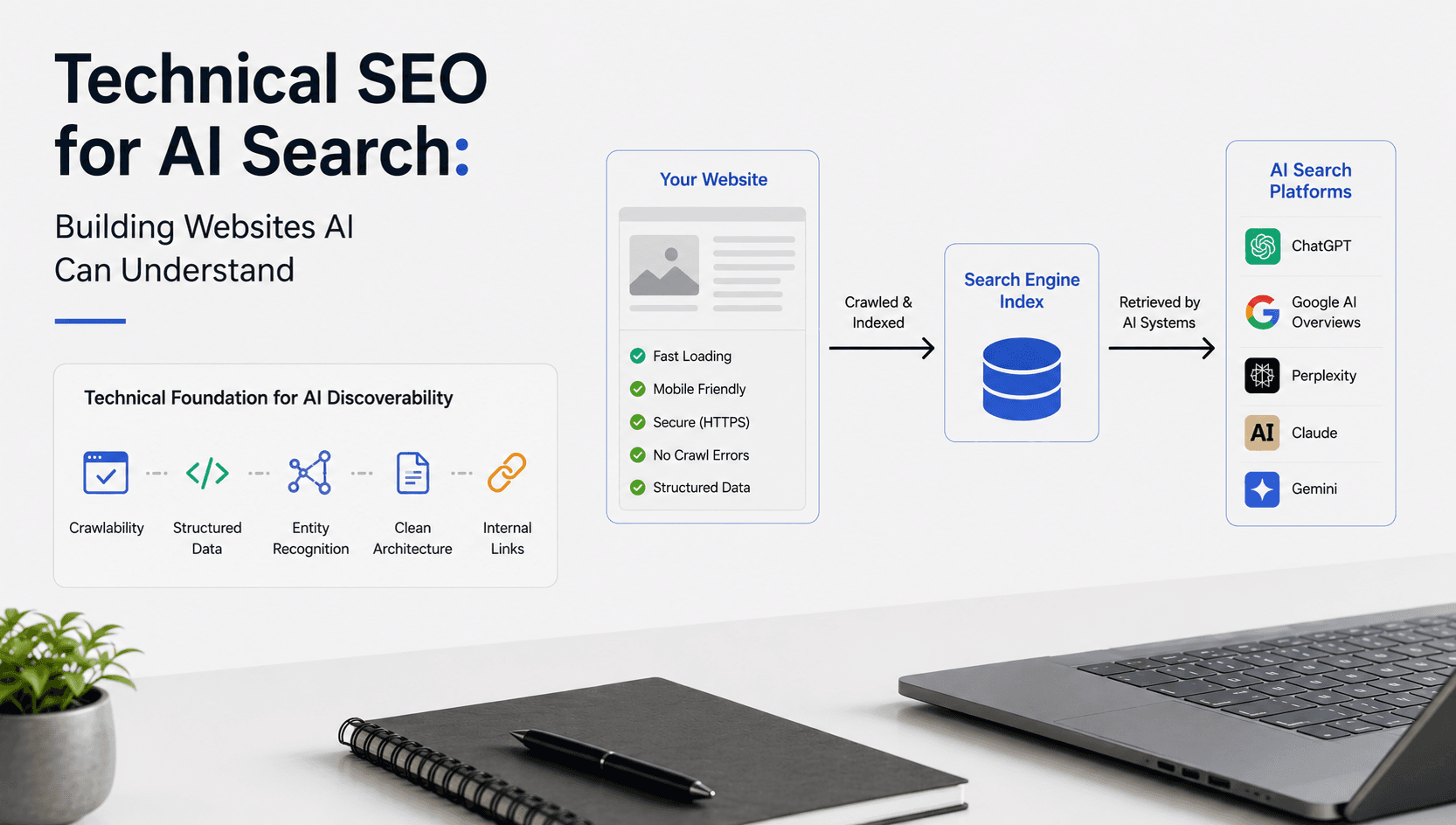
Platforms like ChatGPT, Google AI Overviews, Gemini, Claude, and Perplexity are changing user expectations. Instead of scrolling through dozens of blue links, users increasingly expect complete, conversational answers generated from multiple trusted sources. Behind these experiences are sophisticated retrieval systems that prioritize semantic understanding, entity relationships, structured knowledge, and content quality over simple keyword matching.
This shift is driving a broader wave of digital modernization. Businesses are redesigning websites, restructuring content, implementing machine-readable data, and engineering knowledge ecosystems that AI systems can understand with greater confidence. Modernization is no longer limited to improving website speed or migrating to cloud infrastructure. It now includes preparing digital assets for AI-powered retrieval, recommendation, and reasoning.
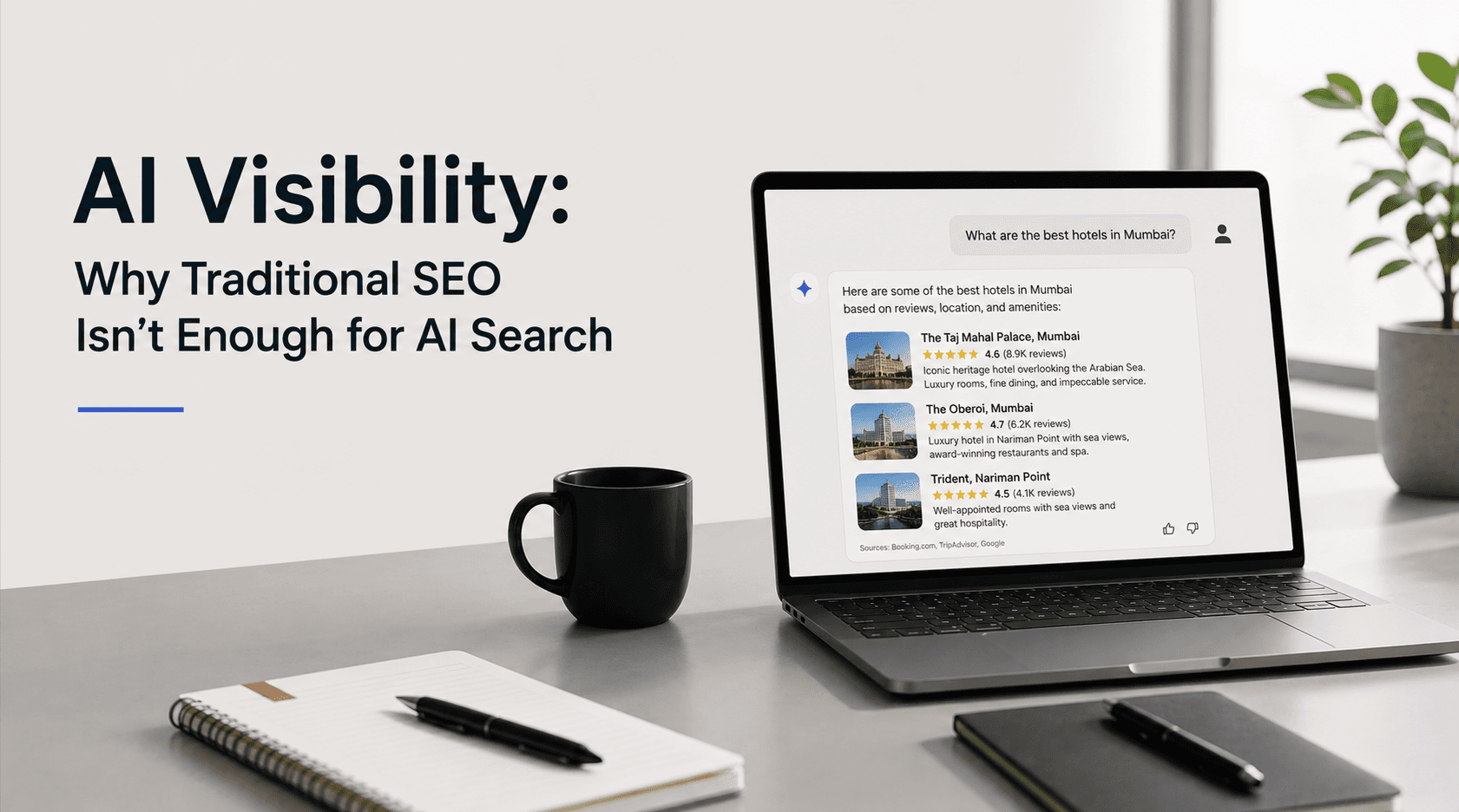
Organizations that recognize these trends early will be better positioned to maintain visibility as AI becomes the dominant interface for information discovery. Those that continue relying exclusively on traditional SEO strategies risk becoming increasingly difficult for AI systems to discover, interpret, and cite.
This article explores the most important modernization trends shaping AI search and explains why they matter for organizations planning their long-term digital strategy.
AI Search Is Replacing Traditional Search Journeys
The most significant modernization trend is the gradual transition from document retrieval to answer generation.
Traditional search engines acted primarily as directories. A user's question produced a ranked list of webpages, leaving the user responsible for opening links, comparing information, and determining which source was most trustworthy.
AI-powered search significantly shortens this process. Modern systems retrieve information from multiple sources, evaluate their reliability, synthesize overlapping evidence, and generate a direct response. Users receive an answer instead of a list of documents.
This transformation changes how organizations compete for visibility. Success increasingly depends on becoming part of the AI's knowledge generation process rather than simply appearing near the top of search results.
Businesses therefore need content that machines can confidently retrieve, verify, and integrate into generated responses.
Entity-Based SEO Is Becoming More Important Than Keyword SEO
One of the clearest modernization trends is the industry's movement toward entity-first optimization.
Search engines and AI systems are becoming better at understanding real-world entities such as organizations, people, technologies, products, services, locations, and concepts. Rather than evaluating isolated keywords, they increasingly interpret the relationships between these entities.
For example, an AI engineering company is no longer evaluated solely because it targets phrases like "AI SEO services." AI systems also attempt to understand the company's expertise, technical capabilities, published research, author credibility, industry relationships, and topical authority.
This shift encourages businesses to establish consistent digital identities across websites, structured data, social profiles, technical documentation, and third-party publications. Strong entity recognition reduces ambiguity while improving retrieval confidence across AI search platforms.
Knowledge Graph Engineering Is Moving Into the Mainstream
Knowledge graphs were once associated primarily with large search engines and enterprise software. Today they are becoming an essential component of modern digital visibility.
Every organization generates information across multiple channels, including websites, documentation, blogs, customer support resources, APIs, developer portals, press releases, and social platforms. Without clear semantic relationships, these assets remain disconnected.
Knowledge graph engineering connects these assets into a coherent network that AI systems can interpret more effectively.
Instead of viewing every webpage independently, retrieval systems begin understanding how authors relate to organizations, how services connect to technologies, how products solve business problems, and how expertise extends across multiple content types.
Businesses investing in knowledge graph engineering are creating digital ecosystems that scale far beyond traditional website optimization.
Structured Data Is Evolving Beyond Rich Results
For many years, structured data implementation focused primarily on earning rich snippets within Google Search.
That objective has expanded considerably.
Modern AI systems use structured information to reduce ambiguity when identifying entities, interpreting relationships, and validating factual information. Organization schema, author markup, service definitions, article metadata, breadcrumb structures, and other machine-readable signals contribute to broader semantic understanding.
Structured data is increasingly viewed as communication infrastructure between websites and AI systems rather than a feature for improving visual search results.
Organizations modernizing their websites are therefore implementing structured data as a core engineering practice rather than an isolated SEO task.
AI Retrieval Optimization Is Emerging as a New Discipline
Ranking alone is no longer sufficient.
AI-powered search requires information that can be efficiently retrieved, understood, verified, and synthesized into generated answers.
This requirement has given rise to AI Retrieval Optimization (AIRO), an emerging discipline focused on improving how content performs within retrieval pipelines used by Large Language Models.
Instead of optimizing exclusively for keyword relevance, AIRO emphasizes semantic completeness, entity clarity, topical authority, technical accessibility, and machine-readable architecture.
As conversational search adoption continues increasing, retrieval optimization will become an increasingly important component of modern SEO strategies.
Content Is Becoming More Comprehensive and Contextual
Modern AI retrieval systems reward depth more consistently than volume.
Organizations are gradually replacing large collections of thin, keyword-focused articles with comprehensive resources that explore topics from multiple perspectives. Rather than publishing dozens of nearly identical pages targeting slight keyword variations, businesses are creating authoritative guides capable of answering broad categories of related questions.
This trend benefits both users and AI systems.
Readers receive more complete explanations, while retrieval models gain richer contextual information that improves semantic understanding. Comprehensive resources also strengthen topical authority by demonstrating sustained expertise across an entire subject area.
The result is a shift from content production toward knowledge development.
Multimodal Search Is Expanding Beyond Text
AI search is no longer limited to written content.
Modern systems increasingly understand images, videos, diagrams, PDFs, presentations, audio, datasets, and interactive documentation. Users can upload screenshots, ask questions about charts, analyze product photos, or combine text with images within the same conversation.
This evolution encourages organizations to think beyond traditional blog content. Technical diagrams, architecture illustrations, explainer videos, product demonstrations, documentation, and visual knowledge assets all contribute to discoverability within multimodal AI systems.
Businesses modernizing their digital presence should therefore treat every content format as a potential source of AI visibility.
Technical SEO Is Becoming AI Infrastructure
Technical SEO remains essential, but its purpose is expanding.
Historically, technical optimization focused on crawlability, indexing, site speed, and mobile usability. These fundamentals remain important, yet they now serve a broader role in supporting AI retrieval.
Semantic HTML, structured data, internal linking, canonicalization, clean URL architecture, XML sitemaps, and accessible content structures all help machines interpret information more accurately.
Modern technical SEO is evolving into machine communication infrastructure that enables AI systems to process websites efficiently and reliably.
AI Agents Will Influence Digital Discovery
One of the newest modernization trends is the rise of autonomous AI agents.
Unlike conversational assistants that answer individual questions, AI agents can complete multi-step tasks such as researching vendors, comparing software, summarizing documentation, evaluating technical requirements, and recommending solutions.
These agents depend heavily on structured, trustworthy, and machine-readable information.
Organizations with clear documentation, consistent entity relationships, transparent product information, and technically accessible websites will be significantly easier for AI agents to evaluate during automated decision-making processes.
As agentic AI adoption grows, optimization will increasingly extend beyond human users toward autonomous digital systems acting on their behalf.
Modernization Is Becoming an Ongoing Engineering Process
Perhaps the most important trend is that modernization is no longer a one-time project.
AI models evolve continuously. Search interfaces change. Retrieval systems improve. New structured data standards emerge. User behavior shifts toward increasingly conversational interactions.
Organizations can no longer modernize their websites every five years and expect to remain competitive.
Instead, AI readiness requires continuous engineering. Content must be updated, structured data maintained, knowledge graphs expanded, technical foundations improved, and semantic coverage strengthened as industries evolve.
Businesses treating modernization as an ongoing capability rather than a periodic redesign will be better equipped to adapt to future changes in AI search.
Any questions about this blog?
Frequently Asked Questions
What are AI search modernization trends?
AI search modernization trends are the technological and strategic changes helping businesses adapt to AI-powered search experiences. These include entity SEO, knowledge graph engineering, AI Retrieval Optimization, structured data, multimodal search, semantic content architecture, and AI-ready technical SEO.
Why is traditional SEO no longer enough?
Traditional SEO remains important, but AI search systems evaluate much more than keyword relevance. They also consider semantic understanding, entity relationships, topical authority, retrieval confidence, and structured information when generating answers.
What is the biggest modernization trend for websites?
The transition from keyword-focused optimization to AI-ready information architecture is arguably the most significant trend. Websites increasingly need to function as machine-readable knowledge sources rather than collections of independent webpages.
How should businesses prepare for AI search?
Businesses should strengthen technical SEO, implement structured data, build comprehensive topical authority, maintain consistent entity information, improve internal linking, and develop content designed for retrieval rather than rankings alone.
Will AI search replace traditional search engines?
AI-powered search is unlikely to completely replace traditional search in the near future, but it is rapidly changing how people discover information. Many users now begin their research with conversational AI platforms that provide synthesized answers instead of lists of links. As this behavior grows, businesses will need to optimize for both traditional search engines and AI-driven retrieval systems to maintain comprehensive digital visibility.
How often should businesses update their AI search modernization strategy?
AI search technologies are evolving much faster than traditional search algorithms. Businesses should review their AI visibility strategy at least every six to twelve months, while continuously monitoring changes in structured data standards, AI search capabilities, content performance, and technical SEO. Treating modernization as an ongoing process rather than a one-time initiative helps organizations remain competitive as AI search continues to evolve.