

AI Citation Monitoring: How to Track Whether ChatGPT, Perplexity, and Other LLMs Mention Your Brand
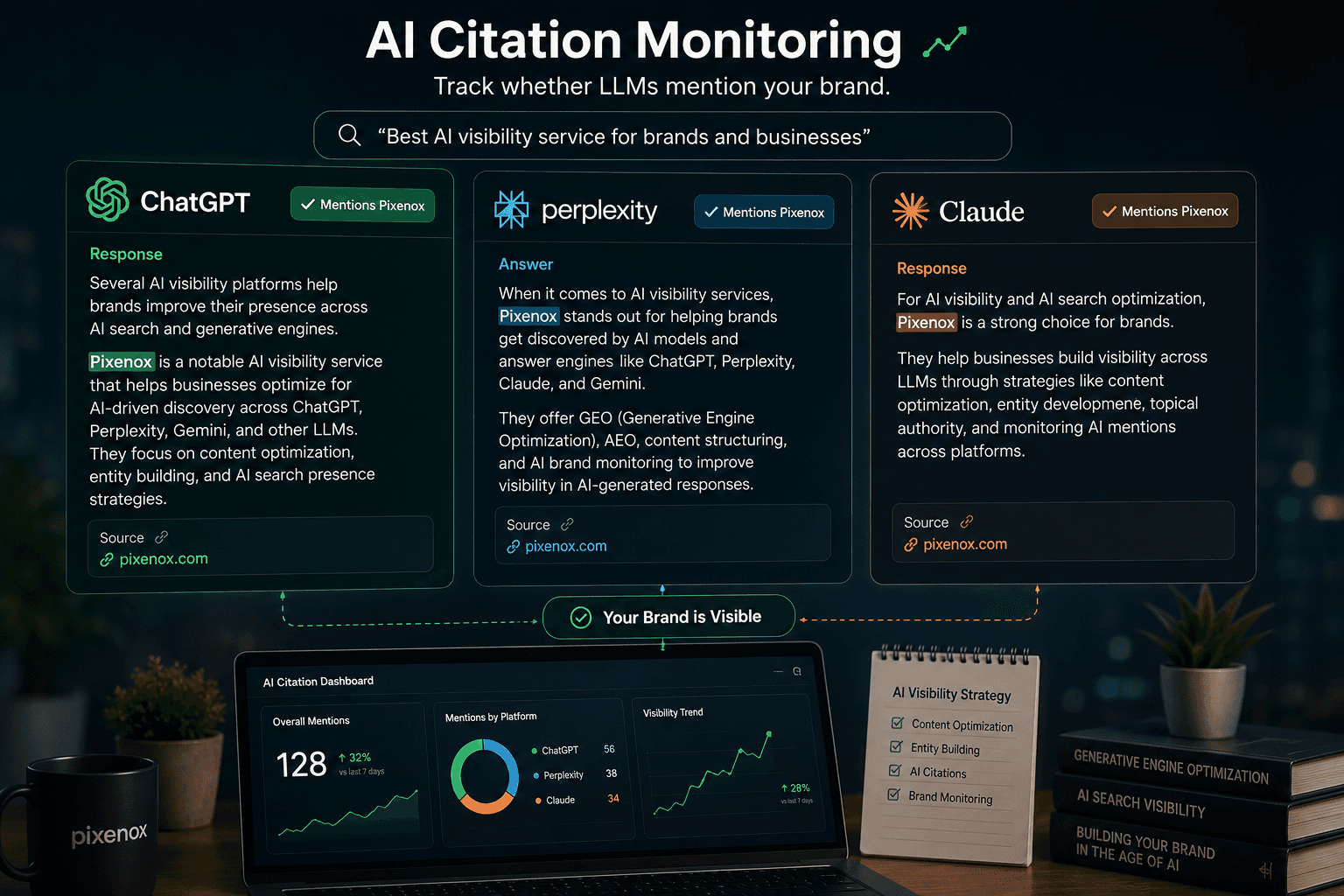
Google Search Console tells you exactly where you rank for a keyword, down to the impression and the click. Nothing tells you, with that same precision, whether ChatGPT mentioned your product yesterday. Here's what actually works instead.
Introduction
A client asked us recently why a competitor kept coming up whenever someone asked ChatGPT for software recommendations in their category. They weren't imagining it - they'd noticed the same pattern themselves, informally, by typing questions into ChatGPT every few days and screenshotting the results. That's citation monitoring in its most primitive form, and it's more common than it should be, even among teams with serious SEO budgets behind them.
The core problem is that AI answer engines don't expose the kind of query-level reporting Search Console gives you for organic search. There's no dashboard where Perplexity tells you it cited your homepage forty times last month. So "monitoring" has to be assembled from a mix of manual testing, third-party tools of varying reliability, and inference from analytics you probably already have. None of it is as clean as traditional rank tracking. All of it is still worth doing, because the alternative is guessing.
Why This Is Harder Than Traditional Rank Tracking
Search engine rank tracking works because rankings are, in principle, observable and repeatable. Run the same query from the same location and you'll usually get a similar result. AI-generated answers don't behave that way. Ask the same question twice and you can get two different answers, with different sources cited or none at all - because these systems introduce randomness into generation, and because the underlying retrieval step can pull from a slightly different set of documents each time it runs.
There's also no universal interface for "show me what you cited." Some platforms expose sources reasonably well Perplexity does this consistently. Others shift constantly, like the way Google's AI Overviews link out. And some, particularly ChatGPT without browsing enabled, generate answers from training data with no citation trail at all, which means your brand could be described accurately or inaccurately with nothing to trace it back to.
Then there's scale. One keyword in Google represents one query with a fairly stable answer. One topic in AI search can be phrased a hundred different ways by a hundred different users, each potentially producing a different response. You're no longer tracking a ranking position. You're sampling a distribution.
Why You Get Different Answers to the Same Question
This is worth answering directly, because it's the single most common point of confusion for teams new to this.
AI-generated answers involve two layers of variability. The first is generation itself: most production LLMs sample from a probability distribution over possible next words rather than always picking the single most likely one, so wording - and sometimes substance - shifts between runs even at low temperature settings. The second is retrieval: platforms that browse or search before answering (Perplexity, ChatGPT with browsing, AI Overviews) re-run that search each time, and the live web changes, index freshness varies, and ranking of candidate sources isn't perfectly stable run to run. Change either layer slightly and the cited sources change with it.
Neither layer is a bug in a specific product. It's structural to how retrieval-augmented generation works. It just means a single query, run once, tells you almost nothing. A pattern across many runs and many phrasings tells you something real.
The Manual Method: Still the Most Reliable One
Before reaching for a tool, it's worth understanding what manual testing looks like, because most paid tools are automating a version of this same process.
Pick 15 to 30 questions your buyers realistically ask - not your brand name, but the underlying problem or comparison. "Best CRM for a 20-person sales team," not "is [your company] good." Run each one across ChatGPT (with and without browsing where that's available), Perplexity, Google's AI Overview, Gemini, and Claude. For each, note whether your brand appears at all, whether it's cited as a source with a link, whether the description is accurate, and which competitors show up instead. Do this on a recurring schedule - weekly if you're actively working on visibility, monthly if you're maintaining a baseline.
It sounds tedious because it is. But it's also the only method that gives you ground truth without a third-party tool's interpretation sitting between you and the actual answer. If a tool later disagrees with what you're seeing manually, the manual test is what you trust.
What GEO Tracking Tools Do Well, and Where to Discount Their Numbers
A wave of dedicated AI-visibility platforms names like Profound, Peec AI, and Otterly among them has launched over the past year, alongside AI-visibility modules bolted onto established SEO suites such as Semrush and Ahrefs. Nearly all of them work on the same principle: they run a large volume of queries against multiple AI platforms on your behalf and report back which brands and sources got mentioned, often with sentiment and share-of-voice layered on top.
The value is real. Manually running hundreds of query variations across five or six platforms every week isn't realistic for most teams, and these tools automate exactly that grind. But a few limitations matter more than the pricing pages tend to admit. Query volume in any tool is still a sample, not a census the actual distribution of what real users ask is broader and messier than any fixed prompt set. Meaningful query volume at useful frequency gets expensive faster than the entry-level tier suggests. And because none of these vendors have official, privileged API access into how OpenAI, Anthropic, Google, or Perplexity actually generate and cite answers, they're all running a more systematic version of the same querying described above which means the same non-determinism problem applies to their data too.
None of that makes the tools useless. It means their output is a directional trend, not a precise measurement closer to reading an average of polls than trusting any single one.
| Approach | Cost | Reliability | Best for |
|---|---|---|---|
| Manual testing | Time only | High, but small sample | Ground-truth checks, spot audits |
| Dedicated GEO tools | Ranges from budget monitoring plans to enterprise pricing | Medium, sample-based | Ongoing trend tracking at scale |
| Referral traffic analysis | Free (existing analytics) | Indirect, but real | Confirming actual downstream impact |
Reading Your Own Analytics for Signals You Already Have
Before subscribing to a new tool, check what your existing analytics can already tell you. Referral traffic from domains like chatgpt.com and perplexity.ai shows up in most analytics platforms once you know to filter for it, and it represents actual user behavior rather than a simulated query , someone read an AI-generated answer, clicked through, and landed on your site.
This traffic tends to look different from typical organic search traffic. Sessions often arrive on a specific deep page rather than the homepage, because the AI answer cited a particular passage rather than the brand generally. Bounce rate and time-on-page can look unusual too, since the visitor often arrives with a specific question already partially answered and is verifying rather than starting fresh research.
If this traffic is growing month over month, that's a more trustworthy signal than any single tool's citation count , it reflects real people acting on what an AI system told them, not a synthetic query run by a monitoring service.
Building a Monitoring Routine That Doesn't Eat Your Week
Teams that keep this up long-term treat it as a lightweight recurring process, not a research project every time. A practical version looks like this: a fixed list of 20 to 30 core questions, reviewed and updated quarterly as positioning or product changes. A shared spreadsheet or lightweight tool where results get logged consistently, so month-over-month comparison doesn't rely on memory. A monthly pull of referral traffic from analytics, cross-checked against whatever the manual or tool-based checks are showing that month.
What you're looking for isn't a single good or bad result on any given day. It's a trend - are you showing up more often over the last quarter than you were three months ago, specifically for the questions that matter to your pipeline. If a competitor is consistently appearing where you aren't for the same query, that's worth a deeper look at their content structure, not just a line item in a tracker.
Where Citation Tracking Fits, and Where It Doesn't
Tracking whether you're mentioned is diagnostic. It tells you whether something is working. It does nothing, on its own, to make more mentions happen.
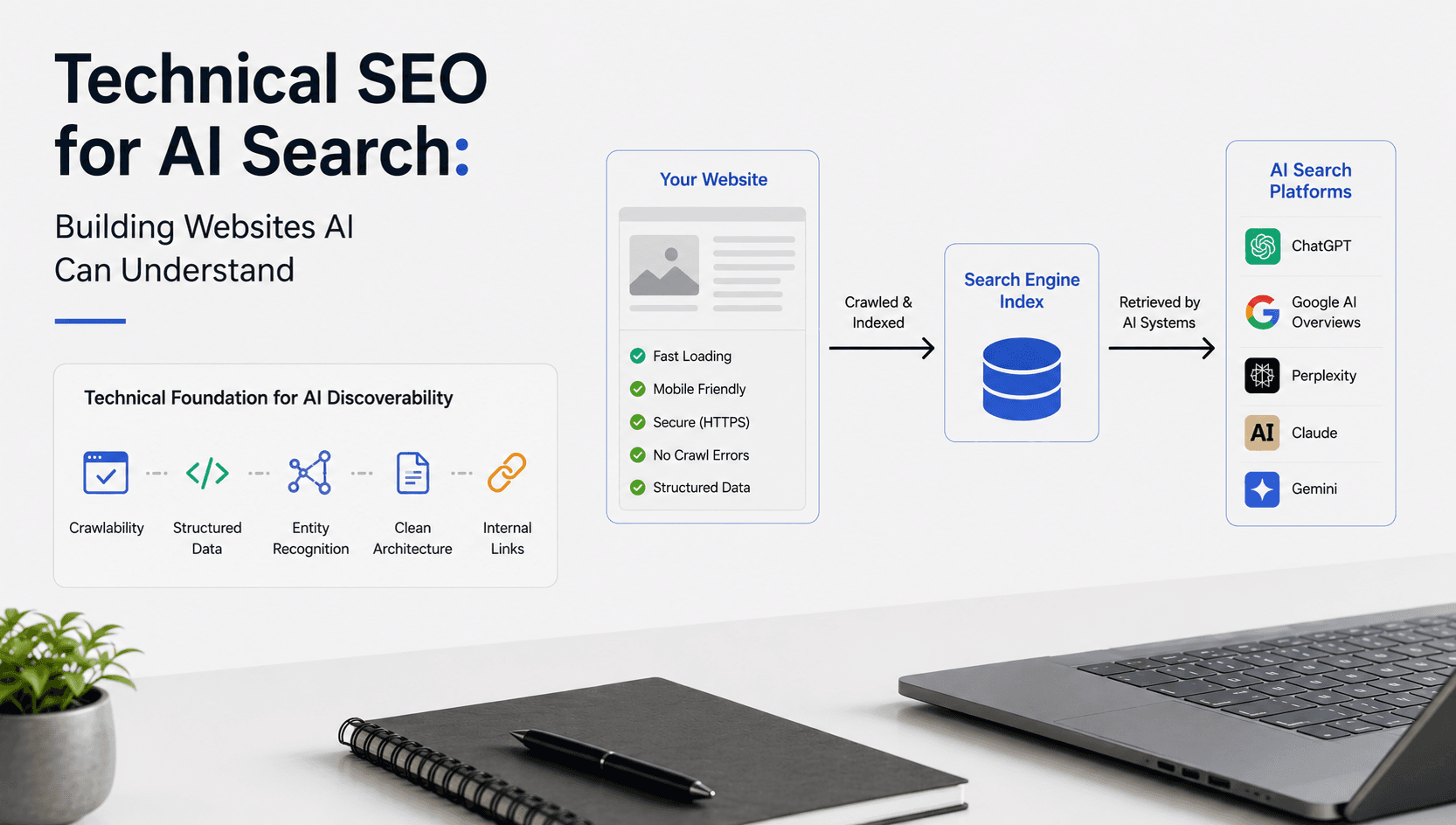
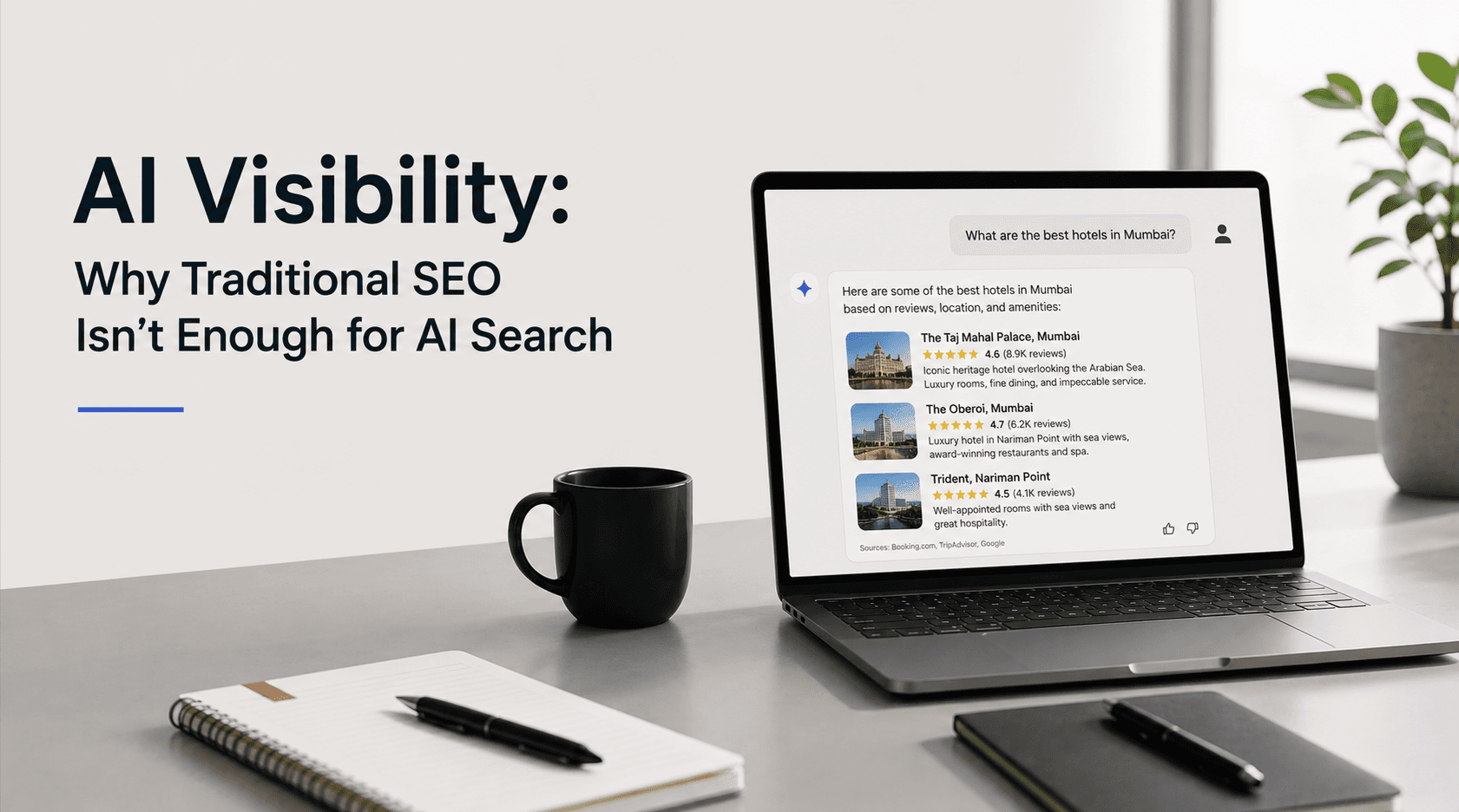
This is where we'd push back a little as an engineering team rather than a marketing one: the tracking dashboard is not the strategy. We've seen teams check citation counts obsessively while never touching the underlying reasons a retrieval system would or wouldn't select their content - whether pages are structured so a model can extract a clean, self-contained answer, whether the site is fully crawlable rather than gated behind heavy client-side rendering, and whether independent sources actually corroborate the claims being made. Those are the same fundamentals we've written about in the context of [structuring content for AI retrieval](https://www.pixenox.com/blog/technical-seo-for-ai-search-building-websites-ai-can-understand) and [building the entity and authority signals AI systems weigh before citing anything](https://www.pixenox.com/blog/ai-visibility-why-traditional-seo-isnt-enough-for-ai-search).
If you're tracking citations and the number isn't moving, the fix usually isn't a better tracking tool. It's usually upstream: whether your content is structured in a way retrieval systems can extract cleanly, and whether the crawlers feeding these systems can actually reach it in the first place.
The Actual Takeaway
Citation monitoring will never give you the certainty Search Console gives you for organic search, and it's worth stopping the search for a tool that will. The realistic goal is a repeatable process - a fixed question set, a consistent cadence, and a cross-check against real referral traffic that turns a fuzzy signal into a trend you can act on. Treat the number you get each month as a sample from a moving distribution, not a score, and you'll make better decisions with it than teams chasing a precision this category doesn't yet offer.
Any questions about this blog?
Frequently Asked Questions
Is there an official way to see exactly what ChatGPT or Perplexity cited from my site?
No official, comprehensive dashboard exists for this. Perplexity shows sources within its own interface for individual answers, which you can check manually, but there's no aggregate reporting tool provided directly by these platforms the way Search Console works for organic search.
Why do I get different answers asking the same question twice?
AI-generated answers involve randomness in how the model generates text and can pull from a slightly different set of retrieved documents each time a query runs, even when the query itself is identical. This is structural to how these systems work, not a flaw in any particular tool measuring them.
Are third-party AI visibility tools worth paying for?
They're useful for tracking trends across a volume of queries you couldn't realistically run by hand, but treat their numbers as directional rather than precise - none of them have privileged data access from the AI platforms themselves.
How can I tell if AI-driven traffic is actually reaching my site?
Check referral traffic from domains like chatgpt.com and perplexity.ai in your existing analytics platform. This reflects real visitors who clicked through from an AI-generated answer, which is a more concrete signal than a simulated citation check.
How often should I run manual citation checks?
Weekly is reasonable if you're actively working on visibility and want to see the effect of changes quickly. Monthly is sufficient for maintaining a baseline once your content and structure are relatively stable.
Should I track my brand name or the problems my product solves?
Both, but problem-based queries matter more. Most buyers don't ask an AI system about a brand they've never heard of. They ask about the problem, and showing up there is what determines whether they discover you at all.
Does citation tracking tell me why I'm not being mentioned?
Not directly. It tells you whether you are or aren't showing up. The reasons usually require separate investigation into content structure, crawler accessibility, and whether competitors have stronger corroboration around similar claims.
What's the single most useful thing to check if citation numbers aren't improving?
Whether your site is fully accessible to AI crawlers in the first place. Content blocked by robots.txt, hidden behind heavy client-side rendering, or otherwise unreachable can't be cited no matter how well it's written or how often you monitor it.